
INDEPENDENT MATERIALS INTELLIGENCE
Materials shape
what comes next.
Explore the materials. Understand the trade-offs. Connect a better question to a clearer way forward.
For industry, innovators and the people making material decisions.
A WORLD OF MATERIALS
Different materials.
Connected possibilities.
Look beyond a material name. Explore the requirements, processes and supply-chain questions that give it context.
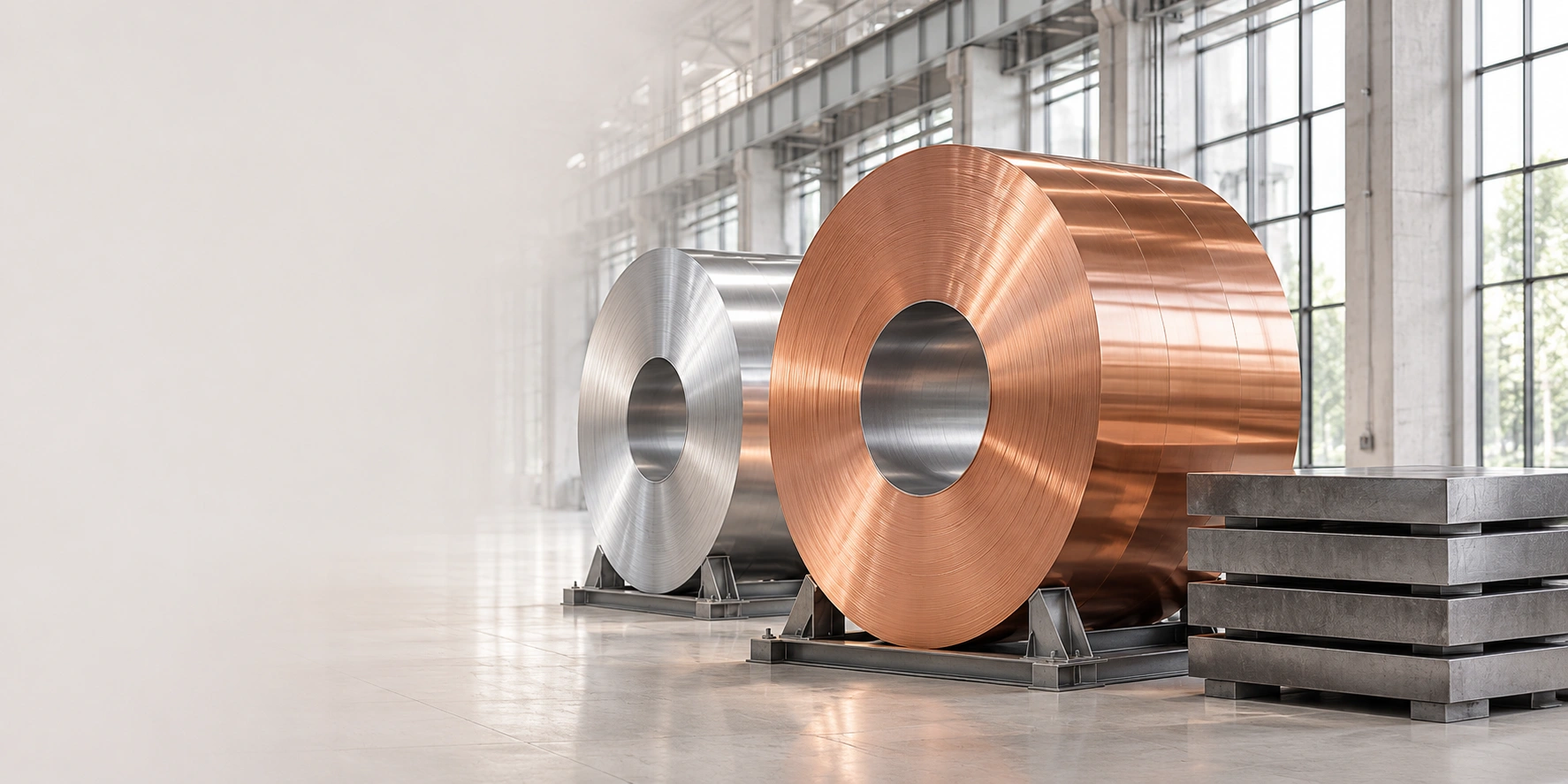
Metals & minerals
Connect copper, aluminium, steel and battery inputs to their roles in the value chain.
Explore →02Polymers & elastomers
Begin with chemistry, processing, service conditions and the intended recovery route.
Explore →03Ceramics & glass
Bring optical, thermal and surface requirements into the same conversation.
Explore →04Composites
Consider reinforcement, matrix, manufacture and joining as one system.
Explore →05Bio-based materials
Ask where a feedstock comes from, what it does and what happens after use.
Explore →06Secondary materials
Separate collection, recovery, quality and verified recycled-content claims.
Explore →FROM SOURCE TO SECOND LIFE
The material is only
part of the story.
Follow the handovers that turn a resource into a useful product.
- 01 / ORIGIN
Source
Feedstock, location and evidence of origin.
- 02 / TRANSFORMATION
Process
Grade, energy, yield and manufacturing route.
- 03 / APPLICATION
Use
Performance, service life and maintainability.
- 04 / NEXT LIFE
Recover
Collection, separation and a realistic next use.
APPLICATIONS
Start with the job
the material must do.
Five application contexts make the important questions more concrete.
Built environment
A building is a connected assembly, with service life and repair needs.
→02Mobility
Balance mass, durability, manufacture and disassembly.
→03Energy systems
Follow materials from supply to installed equipment and recovery.
→04Electronics
Connect function, heat, joining and recoverability.
→05Packaging
Begin with protection and the actual collection system.
→THE DECISION LAB
Useful tools.
Visible assumptions.
Explore a scenario, find the missing evidence and leave with a better brief.
Materials Explorer
Filter educational profiles by family and application.
Explore →02Material Flow
Compare mass, processing yield and input costs on a consistent basis.
Explore →03Feedstock Balance
Explore the physical balance between recovered feedstock and required input.
Explore →04Evidence Brief
Keep missing critical records visible and download a local discussion brief.
Explore →RESEARCH & CONTEXT
Read the evidence.
Keep the context.
Original short briefs connect primary sources with practical materials questions.
Critical minerals, wider questions
Supply resilience needs context, definitions and dated evidence.
Explore →02More value from material use
Resource demand is a systems question, not only a material substitution.
Explore →03Recycling needs a whole-life view
A circularity claim should explain its boundary and the evidence behind it.
Explore →04Information that travels with materials
Distinguish a useful evidence record from a legal product passport.
Explore →A BETTER HANDOVER
From interest
to informed discussion.
A useful brief records the material, the application, its limits and what still needs to be checked.
A material decision connects technical performance, commercial constraints and the people who hold the evidence.
Prepare your brief →Ask three things.
What must it do?
What evidence supports that?
What would change the decision?